
blog
Fall Is for Trees: Why September Is a Great Time to Plant
Aug
When many people think about planting trees and shrubs, spring is the first season that comes to mind. But here in southeastern Massachusetts and Rhode Island, September may offer even better conditions for establishing new additions to the landscape.
The combination of warm soil, cooler air and dependable fall moisture gives trees and larger shrubs an opportunity to focus their energy below ground. Instead of supporting rapid top growth or struggling through summer heat, newly planted trees can begin developing the strong root systems they need for long-term success.
Warm Soil Encourages Root Growth
Although September days become milder, the soil retains much of the warmth it absorbed during summer. Roots remain active in warm soil, even after the visible growth above ground begins to slow.
This gives newly planted trees and shrubs several weeks to establish roots before winter. Root development can continue as long as soil temperatures remain favorable, helping plants settle into their new surroundings before the ground freezes.
By the time spring arrives, fall-planted trees are already in place and ready to grow.
Cooler Weather Reduces Planting Stress
Summer can be demanding for a newly planted tree. High temperatures, intense sunlight and dry periods cause plants to lose moisture quickly, increasing transplant stress and the need for frequent watering.
September’s cooler days and nights reduce that pressure. Trees lose less moisture through their leaves, allowing more energy to be directed toward root establishment. Fall weather also makes planting and caring for larger specimens more comfortable for the gardener.
Rainfall patterns can vary from year to year, so regular watering is still essential. However, cooler temperatures generally help the soil retain moisture longer than it would during midsummer.
A Head Start on Spring Growth
A tree planted in September does not have to divide its energy between establishing roots and producing a full flush of spring growth immediately after planting. Instead, it has part of the fall to begin settling in, followed by winter dormancy.
When temperatures warm again, the plant can resume root development and begin growing from a stronger foundation. This early advantage can help a tree or shrub handle its first summer more successfully.
Well Suited to Our Growing Region
Redwood Nursery serves gardeners throughout southeastern Massachusetts and nearby Rhode Island, where landscapes generally fall within USDA Hardiness Zones 6b and 7a. Our long autumns and relatively gradual transition into winter often provide an excellent planting window for trees and hardy shrubs.
Popular choices for fall planting include:
- Shade trees such as maples, oaks and lindens
- Flowering trees such as dogwoods, crabapples and redbuds
- Evergreens, including arborvitae, spruce and pine
- Larger flowering shrubs such as hydrangeas and viburnums
- Broadleaf evergreens and privacy-screening plants
- Native trees and shrubs that support birds and pollinators
The right choice depends on your property’s sunlight, soil drainage, available space and the plant’s mature size. Redwood Nursery’s team can help you select a tree or shrub that will thrive in your particular location.
Fall Planting Still Requires Watering
Cooler weather does not eliminate the need for watering. A newly planted tree should be watered deeply and consistently until the ground begins to freeze, especially during dry stretches.
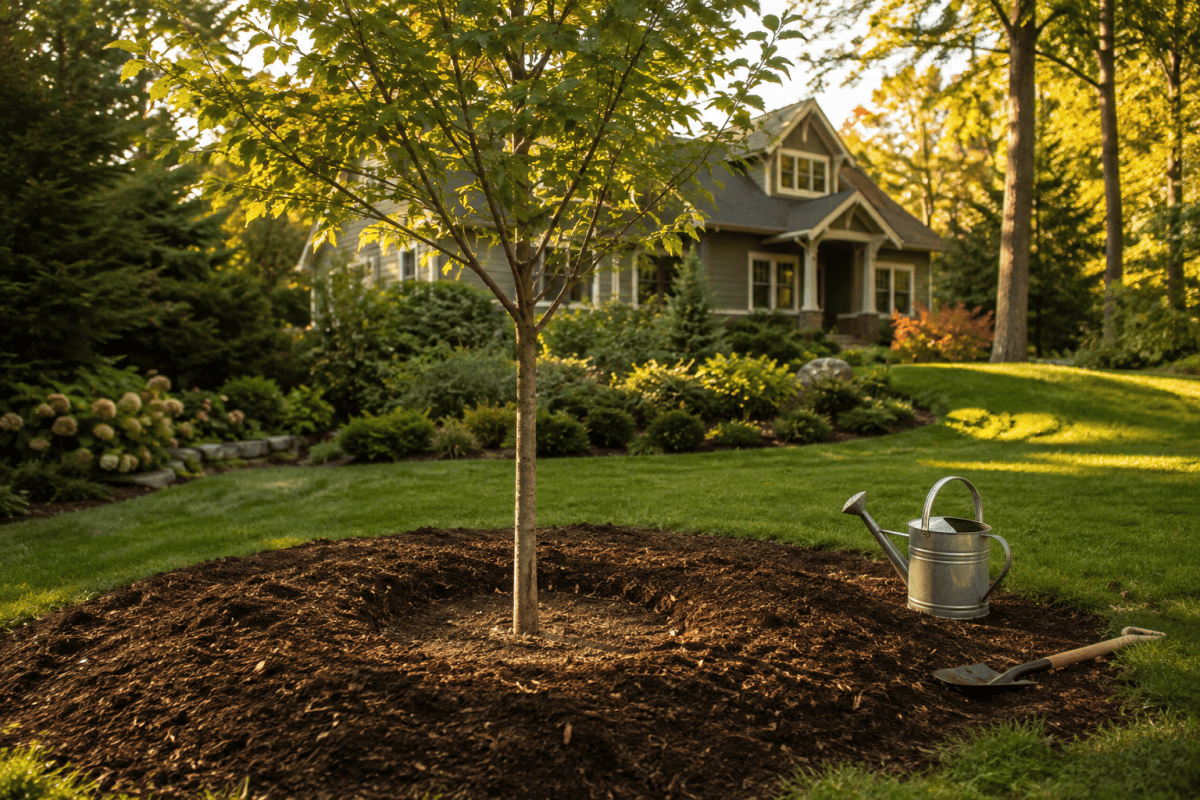
Apply two to three inches of mulch around the root zone to help conserve moisture and moderate soil temperature. Keep mulch several inches away from the trunk rather than piling it against the bark.
Proper planting depth is equally important. The root flare—the point where the trunk begins to widen at the base—should remain visible at or slightly above the surrounding soil level. Planting too deeply is one of the most common causes of long-term tree problems.
Plant Now for Years of Benefits
Trees are among the most valuable additions you can make to a landscape. They provide shade, privacy, seasonal color, wildlife habitat and lasting structure. Properly placed trees may also help cool outdoor living areas, soften views and make a home feel more welcoming.
September offers an opportunity to make that investment under some of the year’s most favorable planting conditions.
Visit Redwood Nursery in Swansea to explore our selection of shade trees, flowering trees, evergreens and larger shrubs. Bring photos and approximate measurements of your planting area, and our knowledgeable team can help you find the right plant for the right place—and provide the planting and care advice needed to get it off to a strong start.
Frequently Asked Questions About Fall Tree Planting
How late in the fall can I plant a tree?
Trees can generally be planted as long as the soil remains workable and there is enough time to water them properly before the ground freezes. September and October are especially favorable in southeastern Massachusetts and Rhode Island. Earlier planting provides more time for root development.
Are some trees better suited to fall planting than others?
Many deciduous trees, evergreens and hardy shrubs establish very well in fall. Selection should be based on the site and the plant’s specific needs. Redwood Nursery can help you determine whether a particular variety is a good candidate for fall planting.
How often should a newly planted tree be watered?
Water thoroughly immediately after planting and continue checking the soil regularly. The root ball should remain evenly moist but not waterlogged. Deep watering is more beneficial than frequent light sprinkling, and watering should continue during dry fall weather until the ground begins to freeze.
Should I fertilize a tree when planting it?
Avoid using strong, fast-release fertilizer at planting time unless specifically recommended for the plant and site. The immediate goal is root establishment, not excessive top growth. Proper soil preparation, watering and mulching are usually more important.
Does a newly planted tree need to be staked?
Not every tree requires staking. Stakes may be helpful in very windy locations or when the root ball is not stable, but they should allow some natural trunk movement and should not remain in place indefinitely.
Can Redwood Nursery help me choose the correct tree?
Yes. Consider bringing photos of the location along with information about sunlight, soil moisture, nearby structures and the amount of space available. Redwood Nursery’s team can help you compare options based on appearance, mature size and growing requirements.

