

blog
Add a Second Season of Interest with Ornamental Grasses
Aug
When summer flowers begin to fade, ornamental grasses step into the spotlight. Their graceful movement, rich fall color and distinctive seed heads bring renewed energy to the landscape—often lasting well into winter.
For gardens in southeastern Massachusetts and nearby Rhode Island, ornamental grasses are especially valuable. Many varieties perform beautifully in our Zone 6–7 climate, tolerating summer heat while standing up to the cooler temperatures and changing weather of fall.
More Than Just Foliage
Ornamental grasses contribute several layers of interest to the garden:
- Fall color: Green blades may turn shades of gold, bronze, burgundy or copper as temperatures cool.
- Movement: Flexible foliage sways in the breeze, adding life to otherwise still planting beds.
- Texture: Fine or arching blades provide a striking contrast to broad-leaved shrubs and perennials.
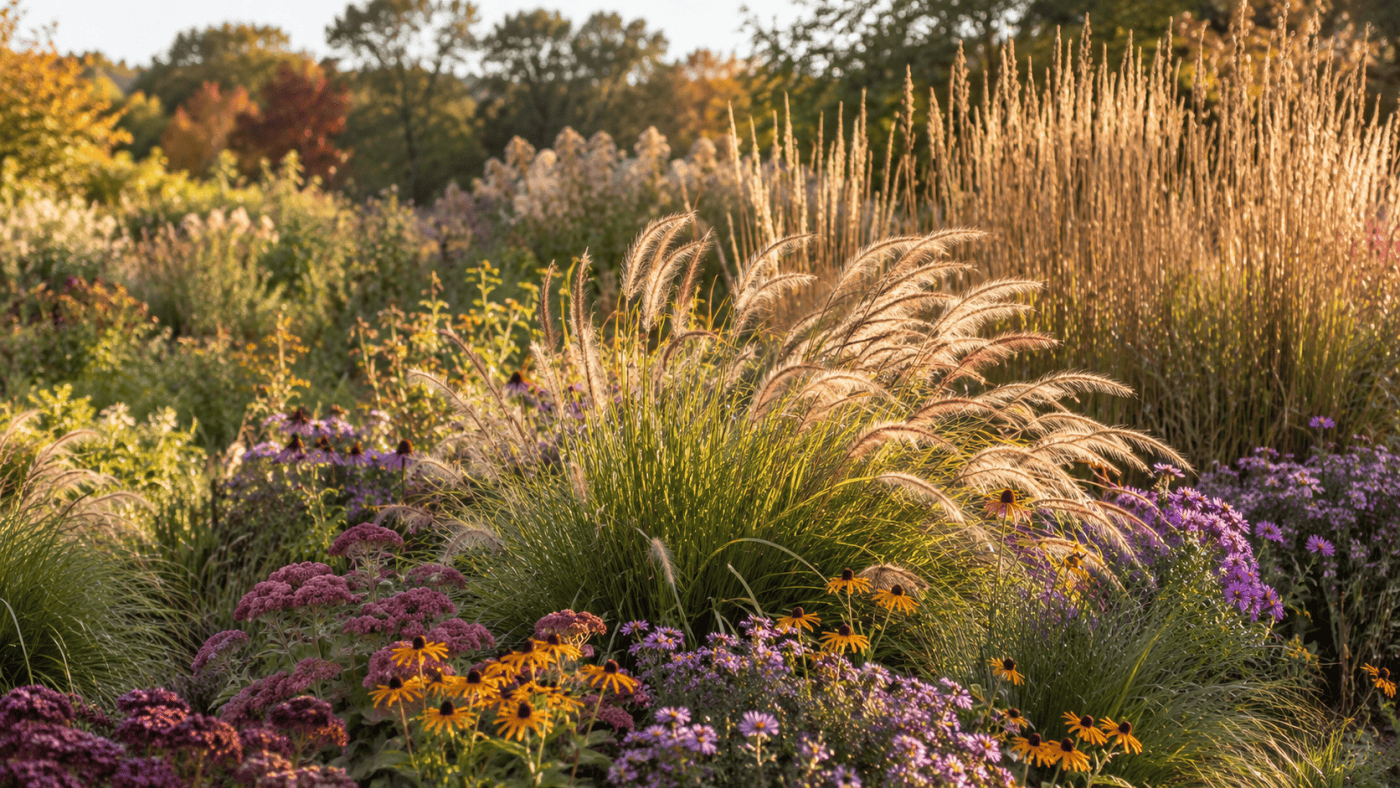
- Flowers and seed heads: Feathery plumes catch the late-afternoon sunlight and often remain attractive after other flowers have faded.
- Winter structure: When left standing, many grasses continue to provide height, texture and movement throughout the colder months.
Their upright forms can also help organize a planting bed, soften hard edges or create a natural-looking screen.
Pair Grasses with Fall-Blooming Perennials
Ornamental grasses become even more impressive when planted alongside late-season perennials. Their foliage and seed heads provide a relaxed backdrop that makes fall flowers appear brighter and more abundant.
Try pairing grasses with:
- Coneflowers
- Black-eyed Susans
- Sedum
- Asters
- Goldenrod
- Joe-Pye weed
- Russian sage
- Anemones
A golden or burgundy grass behind purple asters creates a classic fall combination. Compact grasses can be woven among sedum and coneflowers near the front of a border, while taller varieties provide height and movement toward the back.
Repeating the same grass in several areas can also create rhythm and help connect different sections of the landscape.
Choose the Right Grass for the Space
Ornamental grasses range from small, tidy clumps suitable for walkways and containers to dramatic specimens that can reach several feet tall. Before selecting a variety, consider its mature height and width, sunlight requirements and preferred soil conditions.
Most ornamental grasses grow best in full sun and well-drained soil, although certain varieties can tolerate light shade or moist locations. Proper placement helps plants develop stronger stems, fuller growth and better fall color.
The team at Redwood Nursery can help you choose grasses that fit your available space and pair them with perennials suited to your garden’s light and soil conditions.
Let Them Stand Through Winter
Avoid cutting ornamental grasses down in fall unless the foliage has become damaged or untidy. Standing grasses provide valuable winter structure and look especially beautiful when highlighted by frost or a light snowfall. Their seed heads may also offer food and shelter for birds and other wildlife.
Most grasses can be cut back in late winter or early spring, shortly before new growth begins. Cut the old foliage several inches above the ground, taking care not to damage emerging shoots.
Plant Now for Lasting Beauty
Fall’s cooler air and warm soil create excellent conditions for establishing many hardy ornamental grasses and perennials. With regular watering until the ground freezes, newly planted roots can begin settling in before winter and be ready for vigorous growth in spring.
Visit Redwood Nursery in Swansea to explore ornamental grasses, fall-blooming perennials and shrubs that can extend the beauty of your landscape. Our team can help you create combinations that bring color, movement and structure to the garden through fall—and well beyond.
Frequently Asked Questions About Ornamental Grasses
When is the best time to plant ornamental grasses?
Spring and early fall are both good planting times. Fall offers cooler temperatures and warm soil, which can reduce transplant stress and encourage root development. Plant early enough to allow several weeks for establishment before the ground freezes.
Do ornamental grasses need full sun?
Most varieties perform best with at least six hours of direct sunlight each day. Some grasses tolerate partial shade, but they may grow less densely or produce fewer flowers. Ask the Redwood Nursery team for help selecting a grass for your particular exposure.
Should ornamental grasses be cut back in fall?
In most cases, no. Leaving them standing adds winter interest and can provide habitat for wildlife. Cut them back in late winter or early spring before fresh growth appears.
How often should newly planted grasses be watered?
Water thoroughly after planting and continue checking the soil regularly throughout fall. The root zone should remain evenly moist but not waterlogged. Continue watering as needed until the ground freezes, especially during dry autumn weather.
Will ornamental grasses spread?
It depends on the variety. Clump-forming grasses gradually expand but generally stay where they are planted. Running grasses spread through underground stems and may require more management. Redwood Nursery can help you choose well-behaved varieties appropriate for your landscape.
Can ornamental grasses be divided?
Yes. Many established clump-forming grasses benefit from division every few years if their centers begin thinning or they outgrow their space. Early spring is often the easiest time to divide them, just as new growth begins.

