
blog
Why Fall Is a Good Time to Improve Your Soil
Oct
Fall is not only a good time to plant. It is also one of the best times to improve the soil that supports everything in your garden.
By October, many garden beds are starting to slow down. Annuals are fading, vegetables are wrapping up, and perennials are preparing for dormancy. That makes this a good opportunity to step back, look at the soil itself, and give it some attention before winter.
Why Work on Soil in Fall?
Soil improvement takes time.
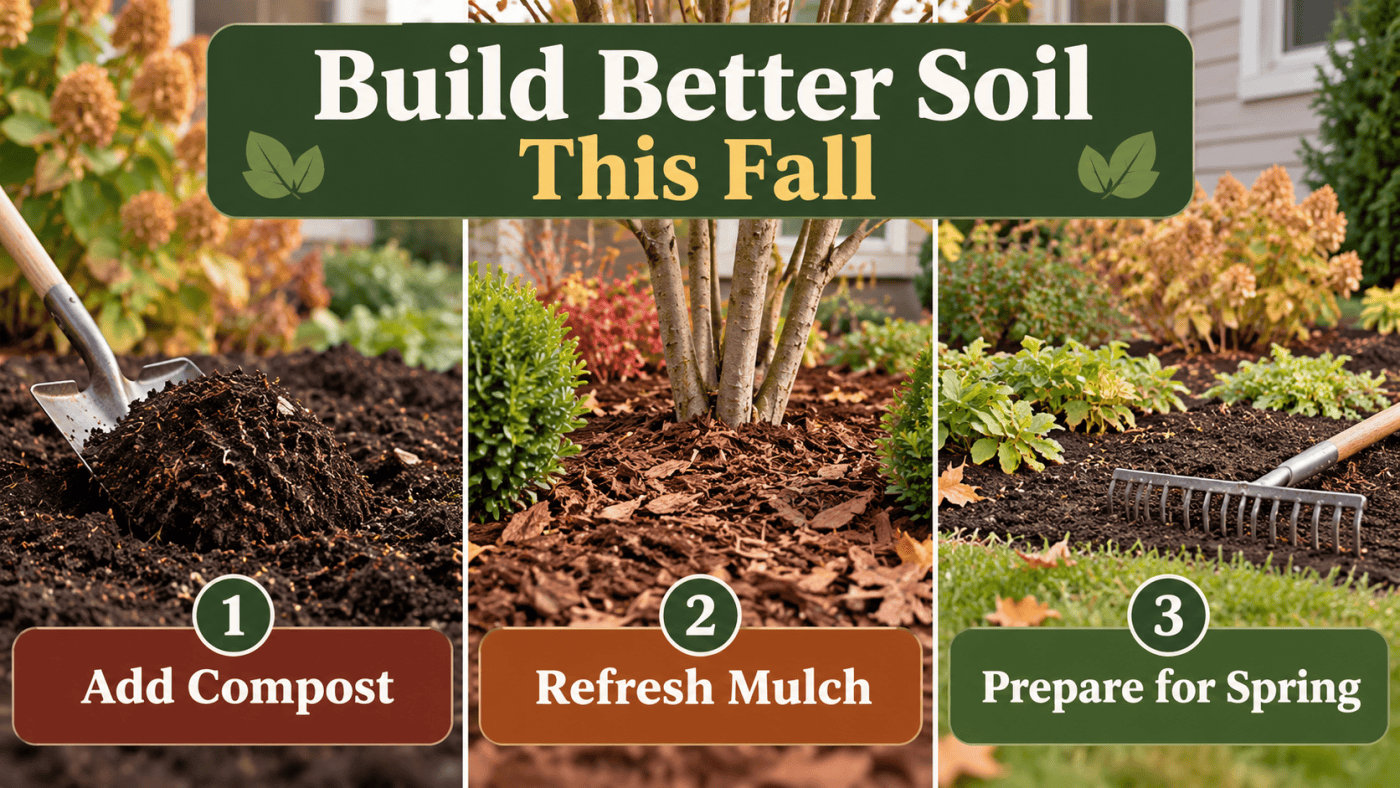
When you add compost or other organic matter in fall, the soil has months to begin incorporating those materials before spring planting season arrives. Rain, snow, freezing and thawing all help break things down and gradually improve soil structure.
That can mean better drainage, improved moisture retention and a healthier environment for plant roots next season.
Fall soil work can also make spring easier. Instead of trying to improve beds at the same time you are planting, dividing perennials and handling all the other spring garden jobs, you can get part of the work done now.
Add Organic Matter
One of the simplest ways to improve garden soil is by adding organic matter.
Compost can help improve both sandy and heavy soils. It can help sandy soil hold moisture and nutrients more effectively, while helping heavier soil develop better structure.
A layer of compost can be worked lightly into open beds or applied around established plants where appropriate.
Other soil amendments may also be useful depending on your conditions and what you plan to grow.
Don’t Forget Mulch
Fall is also a good time to check mulch levels around trees, shrubs and perennial beds.
Mulch can help moderate soil temperatures, reduce moisture loss and protect roots as colder weather arrives.
The key is not to pile mulch directly against trunks or stems. Keep it spread evenly over the root zone and leave some breathing room around the base of plants.
Prepare Now for Spring 2027
Improving soil this fall is really an investment in next year’s garden.
Whether you are planning a new bed, replacing struggling plants or simply trying to get better performance from the landscape, healthier soil creates a stronger foundation.
If you are not sure what your soil needs, the team at Redwood Nursery can help you choose compost, amendments and other products that make sense for your garden.
A little work now can make a noticeable difference when planting season returns.
Frequently Asked Questions
Is fall really a good time to add compost?
Yes. Fall gives compost and other organic materials time to begin integrating into the soil before spring planting begins.
Should I till compost deeply into the soil?
Not always. In many garden beds, compost can be worked lightly into the upper layer of soil or applied as a top dressing, depending on the plants and conditions.
Does mulch help plants in winter?
Yes. Mulch can help insulate the root zone, conserve moisture and reduce rapid temperature changes in the soil.
How much mulch should I use?
A moderate, even layer is usually best. Avoid piling mulch against tree trunks, shrub stems or plant crowns.
How do I know what soil amendment I need?
That depends on your soil type, drainage and what you want to grow. Redwood Nursery can help you select products suited to your garden and landscape goals.

