

blog
Planting Arborvitae for Foundation Backdrops & Privacy Screening
Apr
If you’re looking for a clean, evergreen backdrop or a natural privacy solution, arborvitae is one of the most reliable choices for Southeastern Massachusetts landscapes. Hardy in Zone 6b and well-suited to coastal conditions, arborvitae offers dense foliage, year-round color, and a structured look that works beautifully along foundations or property lines.
Why Arborvitae Works So Well
Arborvitae (Thuja) is prized for its upright growth habit and thick, feathery foliage. It creates an instant sense of enclosure without feeling heavy or overwhelming. Whether you’re screening a neighbor’s yard, softening a fence line, or framing the back of your home, arborvitae delivers consistent results with relatively low maintenance.
Popular varieties like ‘Emerald Green’ stay narrow and compact—ideal for foundation plantings—while larger types like ‘Green Giant’ grow quickly and are perfect for full privacy screens.
Choosing the Right Location
Start by selecting a site with full sun to partial shade. Arborvitae performs best with at least 6 hours of sunlight daily. Good drainage is essential—these plants don’t like sitting in wet soil, especially during winter.
For foundation plantings, allow enough space between the plant and your home for airflow and future growth. Typically, planting 2–4 feet from the foundation works well depending on the variety.
Proper Spacing for Privacy
Spacing is key to achieving a full, lush screen:
- Emerald Green Arborvitae: Space 2.5–3 feet apart
- Green Giant Arborvitae: Space 5–8 feet apart
Planting too far apart creates gaps, while planting too close can restrict airflow and lead to disease over time.
Planting Tips for Success
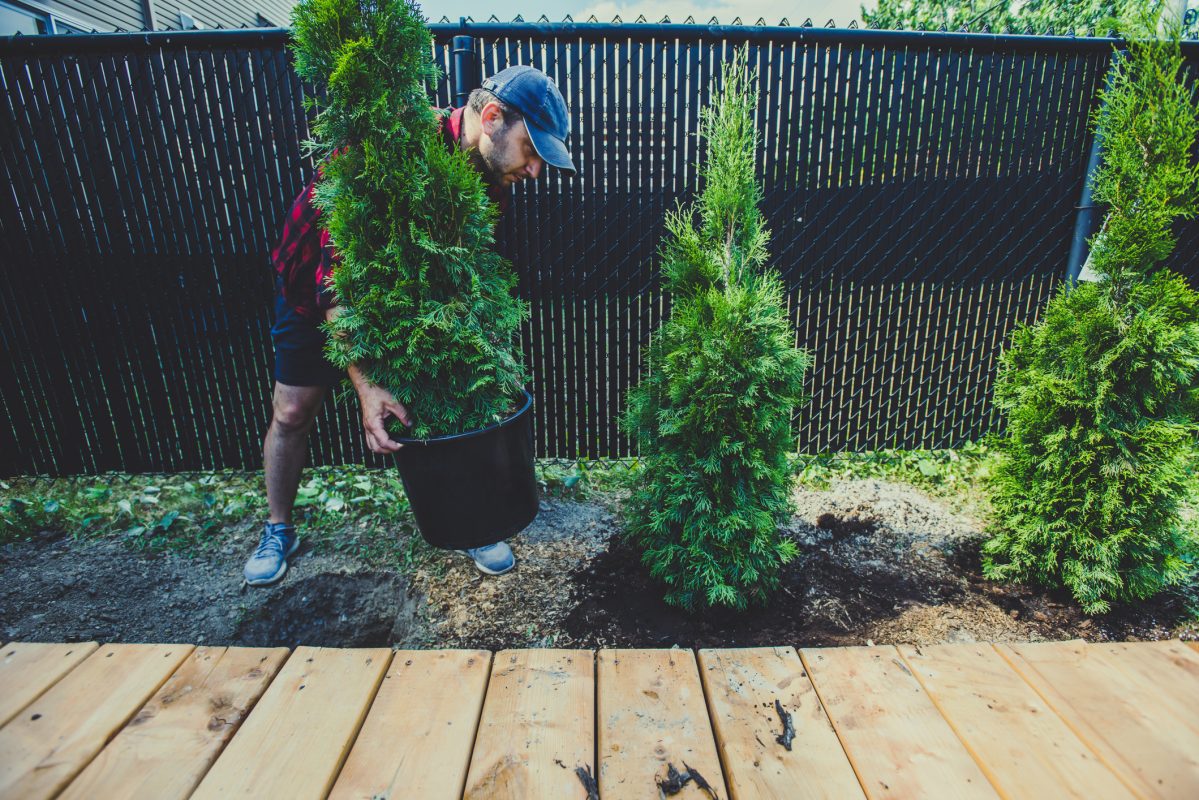
- Dig a wide hole – About twice the width of the root ball, but no deeper.
- Loosen the roots – Especially if the plant is container-grown.
- Backfill with enriched soil – Mix in organic compost or a product like Espoma Plant-tone to support strong root development.
- Water deeply – Immediately after planting and consistently through the first growing season.
- Mulch – Apply 2–3 inches of mulch to retain moisture and regulate soil temperature.
Ongoing Care
Arborvitae is relatively low-maintenance once established, but the first year is critical. Consistent watering, especially during dry spells, will help roots establish properly. Avoid heavy pruning—most varieties maintain their shape naturally.
A Natural Upgrade for Any Landscape
Whether you’re designing a clean, modern foundation planting or creating a backyard retreat with added privacy, arborvitae is a dependable solution. It brings structure, greenery, and long-term value to your landscape.
Visit Redwood Nursery in Swansea, MA to explore our selection of arborvitae and get expert guidance on the best varieties for your space. And don’t forget to download our app for seasonal deals and exclusive offers.
FAQ: Arborvitae Planting & Care
How fast does arborvitae grow?
Growth rates vary by variety. ‘Green Giant’ can grow 3–5 feet per year, while ‘Emerald Green’ grows about 6–12 inches annually.
When is the best time to plant arborvitae?
Spring and early fall are ideal, allowing roots to establish before extreme heat or cold.
Do arborvitae need a lot of water?
They need consistent watering during the first year. Once established, they are moderately drought-tolerant but perform best with regular moisture.
Can arborvitae be planted close to a fence?
Yes, but allow at least 2–3 feet of space for airflow and growth to prevent crowding and disease.
Do deer eat arborvitae?
Yes, arborvitae can be susceptible to deer browsing. Consider deer-resistant varieties or protective measures if deer are common in your area.

