
blog
Is It Too Late to Plant? What Gardeners Should Know
Nov
November brings a familiar question to Redwood Nursery: “Can I still plant, or should I wait until spring?”
The answer depends on what you’re planting, the condition of your soil, and the weather ahead. Some projects may still be possible around Swansea and southeastern Massachusetts, but November calls for more careful decisions than September.
A sunny afternoon is a welcome invitation to get outside. Before picking up your shovel, here’s how to decide what makes sense for your garden.
Start With the Soil
The first frost doesn’t automatically end the planting season. Soil cools more slowly than the air, and a frosty morning can leave the ground beneath it workable.
Check the soil where you intend to plant. It should be unfrozen, reasonably easy to dig, and moist without being waterlogged. If your planting hole fills with water or the soil smears into sticky clumps, postpone the project until conditions improve.
Also consider the forecast. A stretch of moderate weather provides a better opportunity than a mild day immediately followed by prolonged freezing temperatures. Workable soil is a starting point; your plant still needs suitable conditions to settle in.
What May Still Be Possible in November?
Spring-Flowering Bulbs
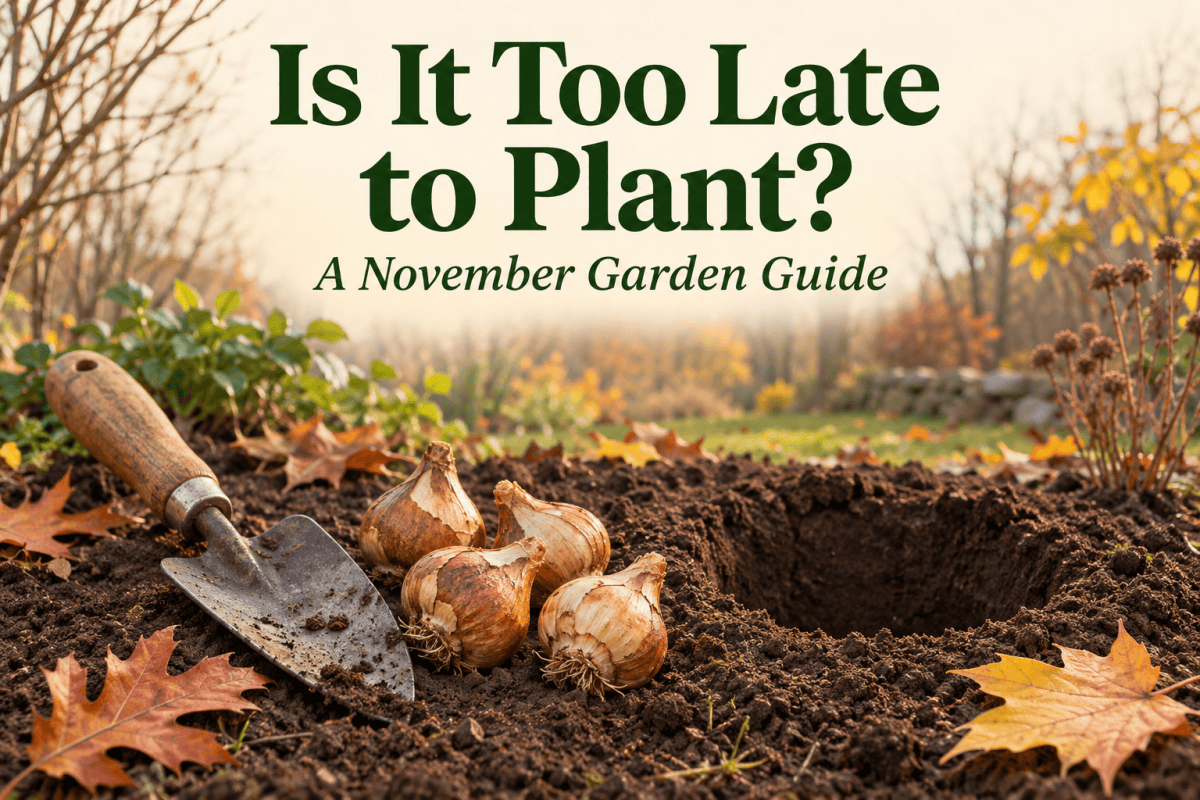
If you still have spring-flowering bulbs to plant, act promptly while the soil remains workable. Hardy bulbs such as daffodils, tulips, and crocuses belong in the ground in fall, where they receive the winter chilling needed for spring growth.
Choose a well-drained location and follow the recommended planting depth on the package. Earlier planting gives bulbs more rooting time, but unplanted bulbs may still have an opportunity before the ground freezes.
Selected Deciduous Trees and Shrubs
Some hardy trees and shrubs that lose their leaves may still be candidates for planting while the ground is workable. Healthy container-grown or balled-and-burlapped plants can be considered, with attention to the species, location, and coming weather.
However, November is later than the preferred fall planting window. UMass Extension recommends allowing at least six weeks before the ground freezes for establishment. Ask Redwood’s staff about your particular plant and site before moving ahead with a late-season project.
Which Projects Are Better Saved for Spring?
Evergreen screens and foundation plantings deserve extra caution. Arborvitae, rhododendrons, and other evergreens retain foliage through winter and can lose moisture when cold soil limits water uptake. They benefit from an earlier planting date that allows more time for roots to establish.
Dividing and moving established perennials is usually better postponed this late. Perennials generally benefit from four to six weeks of establishment before the ground freezes. November offers less time for disturbed roots to recover, so save unnecessary dividing and transplanting for a suitable spring window.
If you have already purchased a plant, ask for advice now about planting or protected overwintering. The best approach depends on the plant and your available space.
Give Late Plantings Careful Follow-Through
If conditions are suitable and you do plant:
- Water thoroughly at planting. Wet the root ball and surrounding soil.
- Keep checking soil moisture. Continue watering as needed during dry weather until the ground freezes.
- Mulch properly. Apply approximately 2–3 inches around trees and shrubs, keeping it away from trunks and stems.
- Skip fertilizer intended to encourage fresh growth. Focus on moisture management and winter preparation.
Cool weather reduces water demand, but a newly planted root ball can still dry out. Don’t assume occasional rain is doing the entire job.
Ask Redwood Before You Dig
Have a planting project you’d like to finish before winter? Bring a photo of the area to Redwood Nursery and tell us about its sunlight, drainage, and exposure to wind.
We can help you consider the plant, the location, and the timing. Sometimes there’s still a useful planting opportunity. Sometimes waiting until spring gives your investment a better start.
Frequently Asked Questions
Does the first frost mean it’s too late to plant?
No. Air frost and frozen ground are different conditions. Some planting may remain possible after frost, depending on the plant, soil, and weather ahead.
Can I plant bulbs in November?
Often, yes—if the ground is still workable and drains well. Plant hardy spring-flowering bulbs promptly rather than leaving them unplanted as winter approaches.
Can I plant arborvitae for privacy now?
November is later than the preferred window for evergreens. Ask Redwood’s staff to assess your project; waiting until spring may offer a better opportunity for establishment.
Do newly planted trees still need watering after their leaves fall?
Yes. Check the root ball and surrounding soil, and water when needed until the ground freezes. Leaf drop doesn’t eliminate the need to maintain adequate soil moisture.

