
blog
Fall Planting in Massachusetts: Your Questions Answered
Sep
Many gardeners think of spring as the traditional planting season, but fall can be one of the best times of the year to add trees, shrubs, and perennials to your landscape.
Cooler days reduce stress on newly planted material, while the soil often remains warm enough for roots to continue developing. That combination can give plants valuable time to establish before winter and put them in a strong position when growth resumes next spring.
At Redwood Nursery & Garden Center in Swansea, Massachusetts, we often encourage customers to take advantage of the fall planting season. If you have questions about what you can plant, how late you can plant, or how to care for new additions to your landscape, these answers can help.
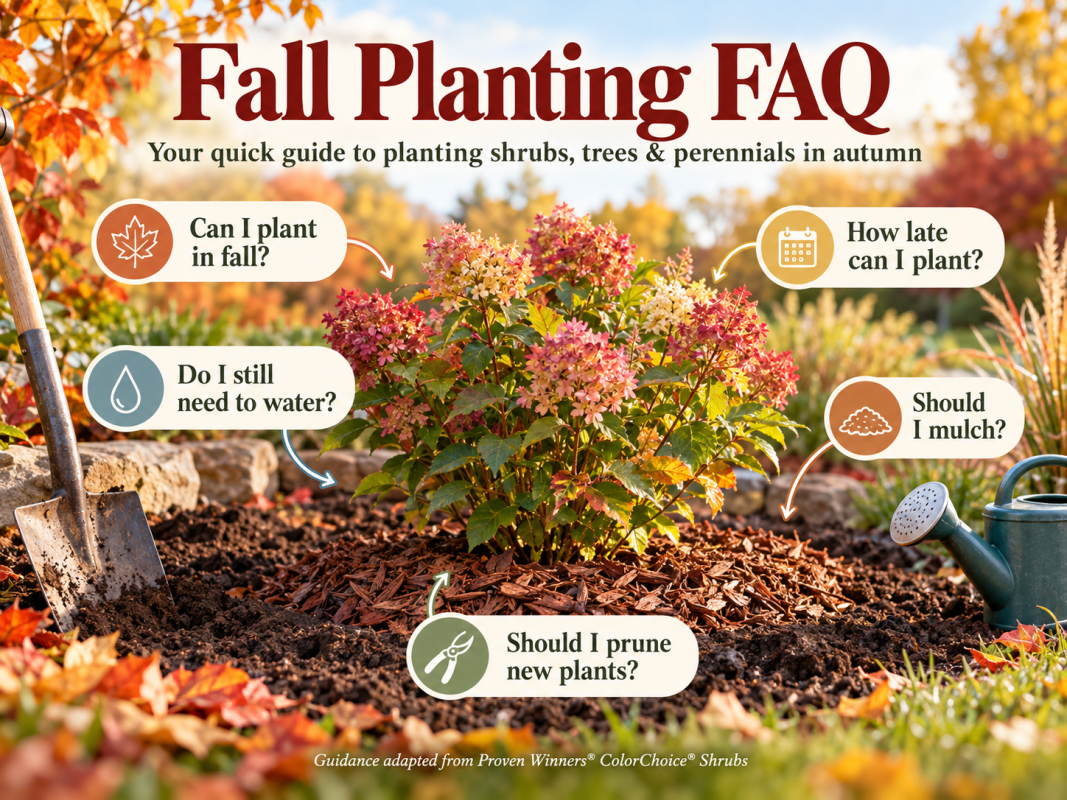
Can I really plant trees and shrubs in the fall?
Absolutely.
Fall can be an excellent time to plant many trees, shrubs, and perennials. Cooler air temperatures and shorter days generally mean plants lose less moisture than they would during the heat of summer. That reduces transplant stress and usually makes watering and establishment easier for the gardener as well.
The important activity during fall planting is happening underground. Even as the visible portion of a plant begins slowing down for the season, its root system can continue developing as long as soil temperatures remain favorable.
Why is fall such a good time for planting?
Healthy roots are the foundation of a healthy plant.
During fall, cooler air temperatures combined with relatively warm soil create favorable conditions for root development. Plants can put energy into establishing their root systems rather than supporting large amounts of new top growth.
Roots can continue growing until soil temperatures become quite cold, giving fall-planted trees, shrubs, and perennials several weeks of establishment time.
The result is essentially a head start on next year.
When spring arrives, a properly planted shrub or tree may already have begun developing the root system it needs to handle warmer weather and new growth.
Is everything suitable for fall planting?
Not necessarily.
Many plants perform very well when planted in autumn, but there are some situations where waiting until spring may be the safer choice.
Plants that are only marginally winter-hardy for our area are generally better planted in spring. Giving these plants an entire growing season to develop roots can improve their chances of making it through their first winter.
Plants that regularly experience winter dieback can also benefit from spring planting.
Special consideration should also be given to evergreens, particularly broadleaf evergreens such as:
- Boxwood
- Rhododendron
- Holly
Evergreens continue losing moisture through their foliage during winter. Once the ground freezes, their roots may not be able to replace that moisture. For that reason, planting these varieties earlier and giving them plenty of time to establish is especially important.
Not sure whether the plant you’re considering is a good candidate for fall planting? Ask the Redwood Nursery team before you plant. We can help you evaluate the plant, location, and time of year.
How late can I plant in the fall?
This is one of the most common questions we hear.
The goal is to give a new plant enough time to begin developing roots before the ground freezes.
Proven Winners ColorChoice Shrubs recommends allowing approximately six weeks before the ground freezes in colder climates.
Notice that this does not mean six weeks before the first frost.
A light frost may affect flowers or tender foliage, but the soil can remain warm enough for root growth long afterward.
For much of the Northeast, planting can often continue well into October, depending upon the weather and the type of plant involved.
And if you find yourself with a plant still sitting in its container very late in the season, planting it in the ground may still be preferable to trying to overwinter it above ground in its nursery pot.
When in doubt, talk with us at Redwood. The answer can depend on the plant and the conditions we’re experiencing that particular fall.
Do I plant differently in the fall?
The basic planting process is essentially the same regardless of season.
Prepare a hole appropriate for the plant, pay attention to planting depth, backfill properly, and water thoroughly after planting.
One of the most common mistakes is planting too deeply. The top of the plant’s root system should generally remain near the surrounding soil level rather than being buried several inches below grade.
If you’re planning a larger landscape project and aren’t sure where plants should go, Redwood’s We Plan, You Plant service can also help you develop a workable planting plan before you begin.
Do fall-planted shrubs and trees still need water?
Yes.
Cool weather reduces water demand, but newly planted material still needs adequate moisture while its roots become established.
Water thoroughly immediately after planting and continue checking the soil during the following weeks.
Don’t assume that cooler temperatures mean the plant no longer needs water. A dry autumn can still create significant moisture stress.
Continue monitoring your new plantings until the ground freezes. During unusually dry years, supplemental watering may be necessary surprisingly late into the season.
The goal is moist soil — not constantly saturated soil.
Should I mulch new fall plantings?
Yes.
A 2-3 inch layer of mulch can help:
- Maintain more consistent soil moisture
- Moderate changes in soil temperature
- Reduce weed competition
- Protect developing roots
- Improve conditions for continued root growth
Shredded bark mulch works well for many landscape applications.
One important point: avoid piling mulch directly against the trunk or stems of the plant. Leave a little breathing room around the base.
Think mulch ring, not mulch volcano.
Should I fertilize when planting in fall?
Usually, no.
Most nursery-grown plants have already received adequate nutrients during production. By fall, plants are also beginning their natural transition toward dormancy.
Applying large amounts of fertilizer at planting generally isn’t necessary.
Instead, focus on the basics:
Right plant. Right location. Proper planting depth. Adequate water. Good mulch.
Those factors will typically do far more for successful establishment than adding fertilizer.
Fertilization can be considered later, usually as the plant begins a new growing season.
Should I prune a newly planted shrub?
Usually very little pruning is necessary at planting time.
Remove damaged or broken branches if needed, but major pruning should generally be based on the specific variety and its flowering habit.
Some shrubs bloom on older growth, while others bloom on new growth. Pruning at the wrong time can remove next year’s flowers.
A good rule for an unfamiliar shrub is simple:
When in doubt, don’t prune yet.
Ask us first and we can help you determine the appropriate timing for your particular plant.
Fall Planting Gives Next Year’s Garden a Head Start
One of the best reasons to garden in fall is that the work you do now can pay off next spring.
Cooler temperatures make gardening more comfortable. Plants experience less heat stress. Roots can become established while the soil remains warm. And when spring arrives, those plants are already in place and ready for another growing season.
Whether you’re adding a flowering shrub, replacing an old foundation planting, planting a new shade tree, or redesigning an entire garden bed, fall may be an excellent time to get started.
Have a Fall Planting Question?
Stop by Redwood Nursery & Garden Center in Swansea and talk with our team. We can help you select plants appropriate for your landscape and explain planting, watering, mulching, and seasonal care.
And if you’re not quite sure what should go where, ask about our We Plan, You Plant landscape design service.
Source & Additional Information
This article was adapted and expanded for Redwood Nursery from educational information provided by Proven Winners® ColorChoice® Shrubs.
For the original Proven Winners Fall Planting FAQ and additional information, visit:
https://www.provenwinnerscolorchoice.com/fall-planting-faq/

