

blog
How to Protect Trees and Shrubs From Winter Damage
Jan
Winter in Southeastern Massachusetts can be unpredictable—freezing temperatures, drying winds, heavy snow, and hungry wildlife all pose risks to trees and shrubs. Taking a few protective steps now can make a big difference in how your landscape looks and performs when spring arrives.
At Redwood Nursery in Swansea, we help gardeners plan ahead with proven techniques and reliable products that protect plants through the toughest months.
Use Burlap to Shield From Wind and Sun
Cold winter winds and bright sun can cause evergreen foliage to dry out, leading to browning or “winter burn.” Broadleaf evergreens like boxwood, holly, rhododendron, and arborvitae are especially vulnerable.
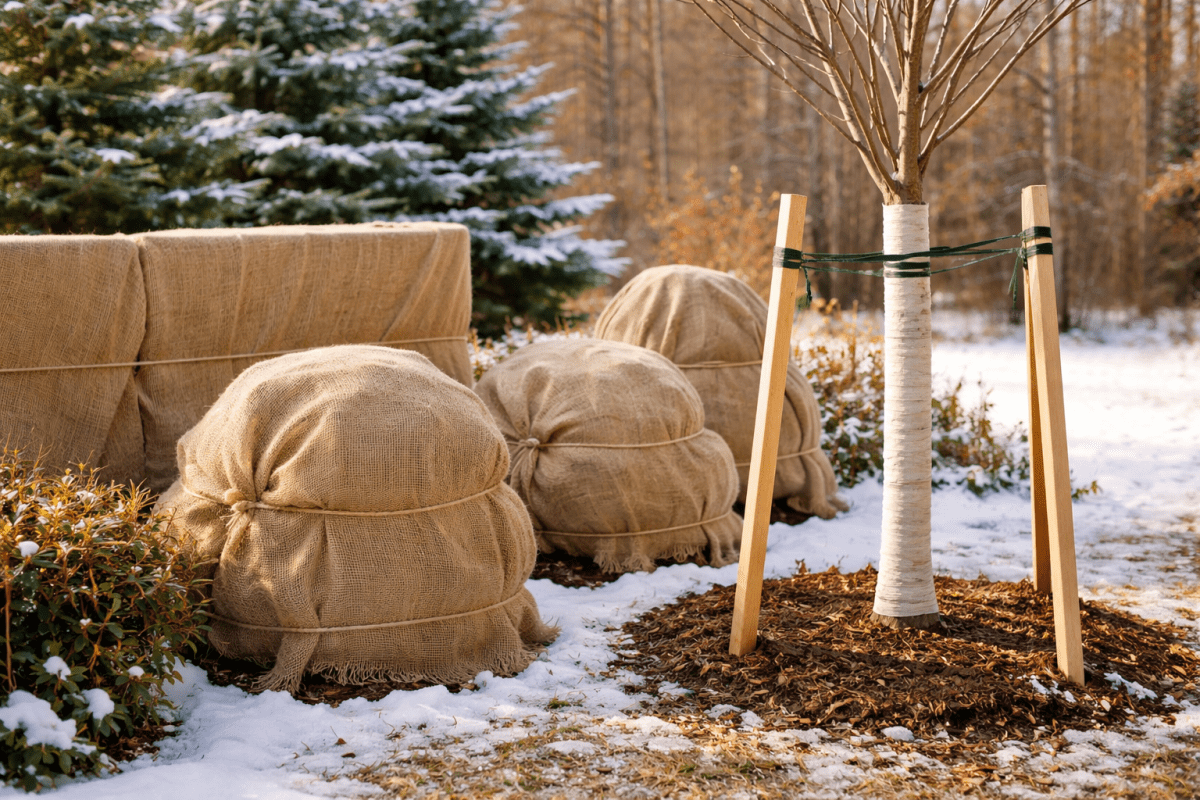
Installing burlap screens on the windward side of shrubs—or wrapping plants loosely with burlap supported by stakes—helps block harsh conditions while allowing airflow. Avoid wrapping plants tightly or using plastic, which can trap moisture and cause damage.
Apply Anti-Desiccants to Reduce Moisture Loss
Anti-desiccant sprays are one of the most effective ways to protect evergreens from winter damage. These sprays create a protective coating on needles and leaves, slowing moisture loss during cold, dry weather.
Products like Bonide Wilt-Stop are easy to apply and provide long-lasting protection when used on a mild day above freezing. One application in late fall or early winter can help plants stay hydrated all season long.
Mulch to Protect Roots and Prevent Frost Heaving
Mulching is just as important in winter as it is in summer. A 2–3 inch layer of organic mulch helps insulate soil, moderate temperature fluctuations, and prevent frost heaving that can expose roots.
Apply mulch after the ground has cooled but before it freezes solid. Keep mulch a few inches away from trunks and stems. Using quality organic products like Espoma mulches and soil conditioners helps improve soil health while protecting plant roots through winter.
Guard Against Deer, Rabbits, and Rodents
Winter is peak feeding season for deer, rabbits, and voles, and young trees are especially vulnerable to bark damage. Once bark is chewed, the damage can be permanent.
Tree guards, hardware cloth, and deer repellents can all play a role in protecting plants. The right solution depends on your property, plant selection, and local wildlife pressure—something our team helps customers navigate every winter.
Local Expertise Matters
Every landscape is different. Exposure, plant age, soil conditions, and wildlife activity all affect winter survival. That’s why planning with expert advice and trusted products makes all the difference.
Stop by Redwood Nursery in Swansea, MA, to get personalized recommendations and everything you need to protect your trees and shrubs this winter.
Winter Tree & Shrub Protection FAQs
Do all plants need winter protection?
Not all, but newly planted trees, young shrubs, and evergreens benefit the most.
When should I apply anti-desiccant sprays?
Late fall or early winter on a dry day when temperatures are above freezing.
How much mulch is too much?
Stick to 2–3 inches—more than that can cause moisture and pest problems.
What’s the best way to prevent animal damage?
Physical barriers like tree guards are the most reliable option.

